The Philosophy

A paradigm shift in horse training.

We don't believe in forcing horses to submit, or desensitizing them until they shut down. The TRT Method is a step-by-step psychological framework that teaches your horse how to find relaxation on his own.

The Biological Reality

Giving a horse a life better than nature intended.

Horses are born as flight animals. Their ultimate and most deeply rooted instinct is survival: to run away from anything they don't understand.

When we bring them into our human world, with indoor arenas, horse trailers, clapping crowds, and loud tractors, we place them in an environment that is entirely unnatural to them. By nature, they simply do not have the knowledge or the instincts to cope with these elements.

It is our responsibility to guide them. Not by stripping away their instincts, but by giving them the tools to process our world safely. When we teach a horse how to feel confident in a human environment, we can actually offer them a life free from constant survival stress, a life better than nature intended.

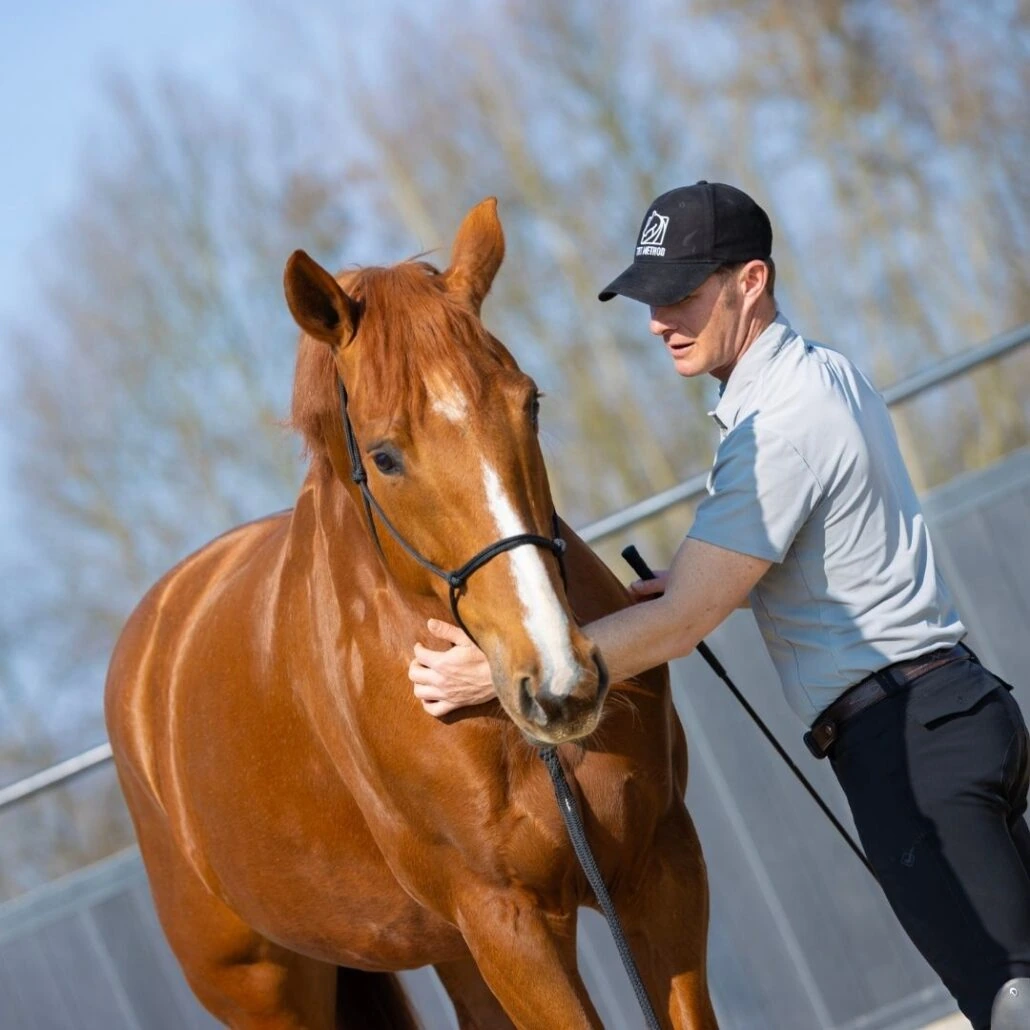
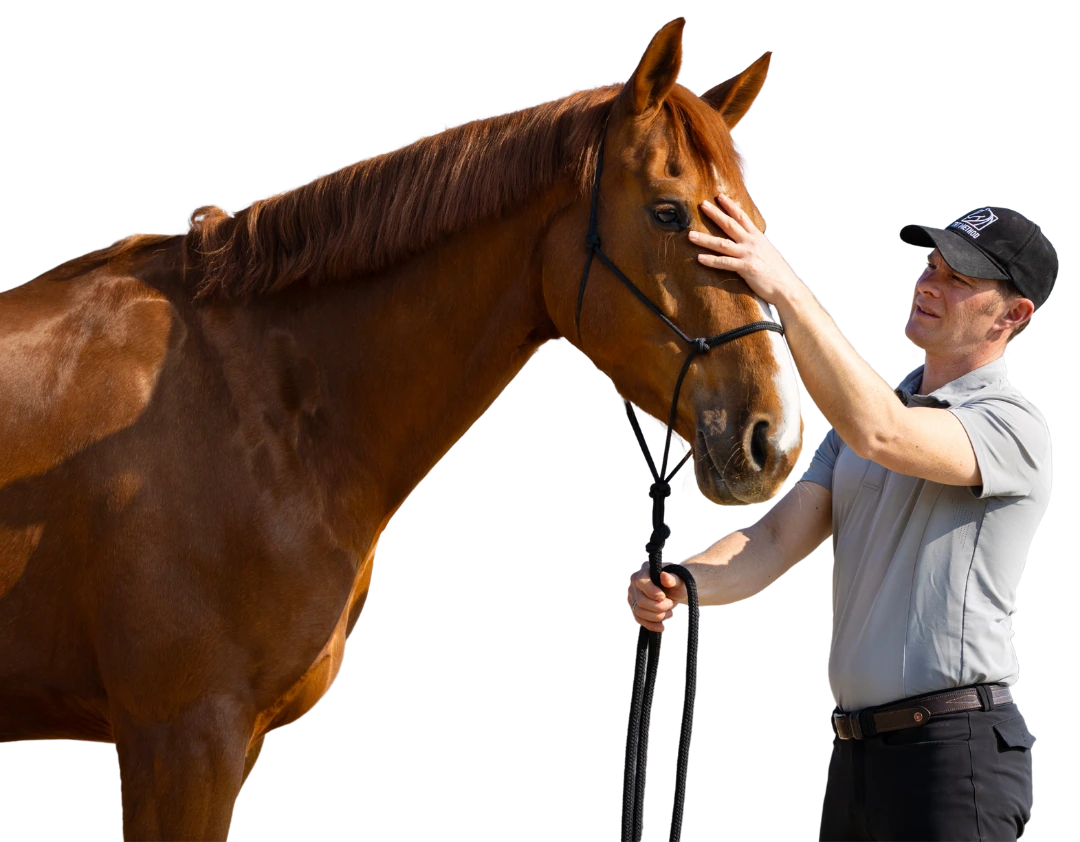
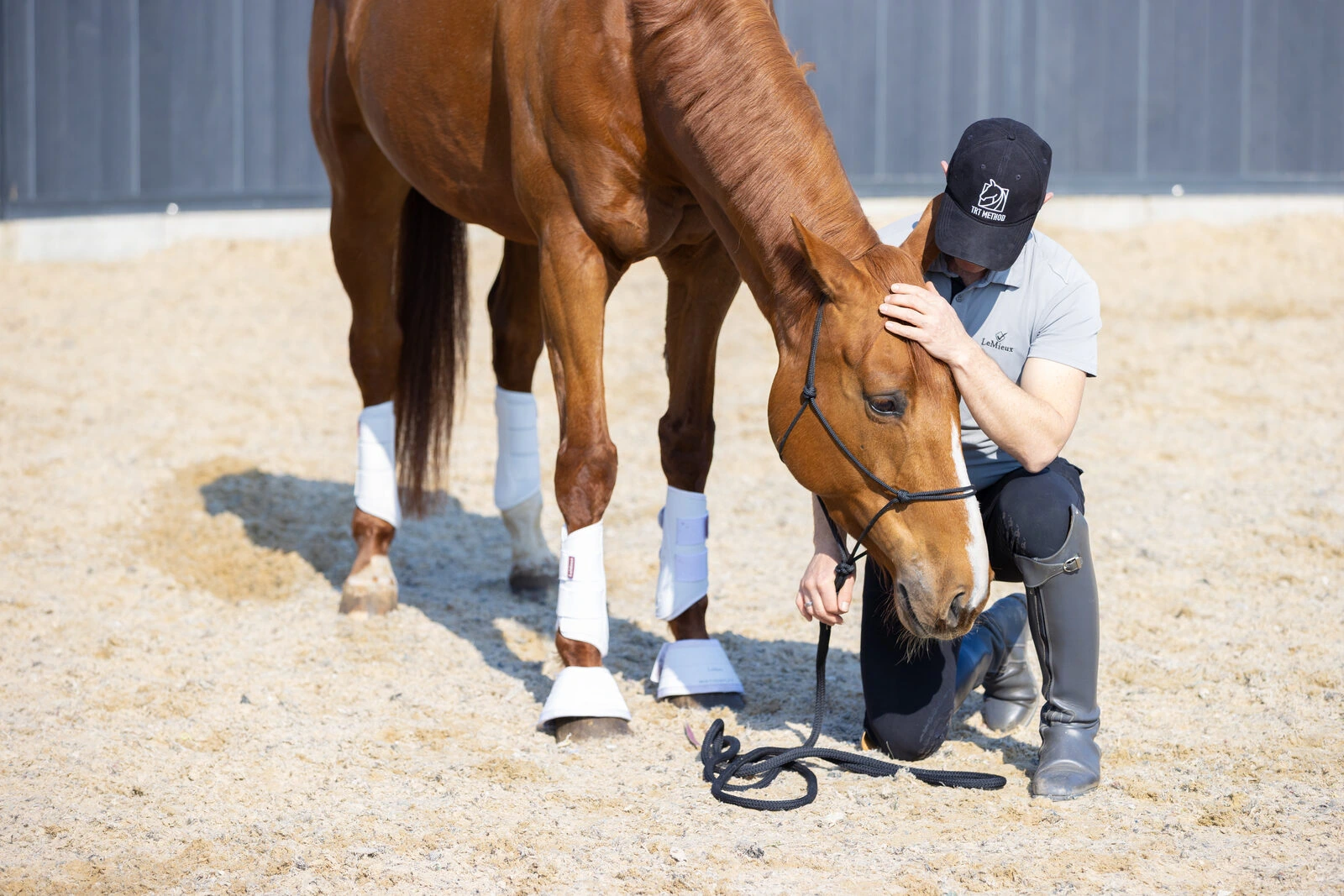
Tristan Tucker reassuring a calm horse
A calm horse learning to release physical tension

Mind & Body Connection

Breaking the physical cycle of tension.

When a horse experiences stress, it's not just in their head. They internalize that stress into a specific physical movement pattern: a hollowed back, a high head carriage, a braced neck, and short, tight steps.

Here is the problem: this physical posture actually sends continuous alarm signals back to their brain. It creates a vicious cycle where the body tells the mind there is danger, and the mind keeps the body tense.

To change the horse's mind, we first have to teach them how to change their posture.

"Think of it like a human who is constantly stressed. You raise your shoulders, tighten your neck, and hold your breath. Eventually, that stiff physical posture makes you feel even more anxious. You can't just 'think' yourself out of it, you have to physically lower your shoulders to signal your brain that you are safe."

Why traditional "desensitization" falls short.

For decades, riders have been taught to expose their horses to scary things until they "get used to it". But as prey animals, horses often just learn to internalize that fear. They shut down mentally, masking their tension until they eventually explode.

The TRT Method flips this completely around.

Instead of changing the environment, we give the horse a voice. We teach them specific physical exercises that trigger a parasympathetic response, literally teaching their brain how to lower their own heart rate.

He isn't reacting to the object. He's reacting to his own body.

The Framework

How the TRT Method works

Three steps, built by Tristan Tucker over thirty years of working with horses that nobody else could get through to. This framework is the foundation everything at TRT is built on.

Find Relaxation

Groundwork & Body Awareness

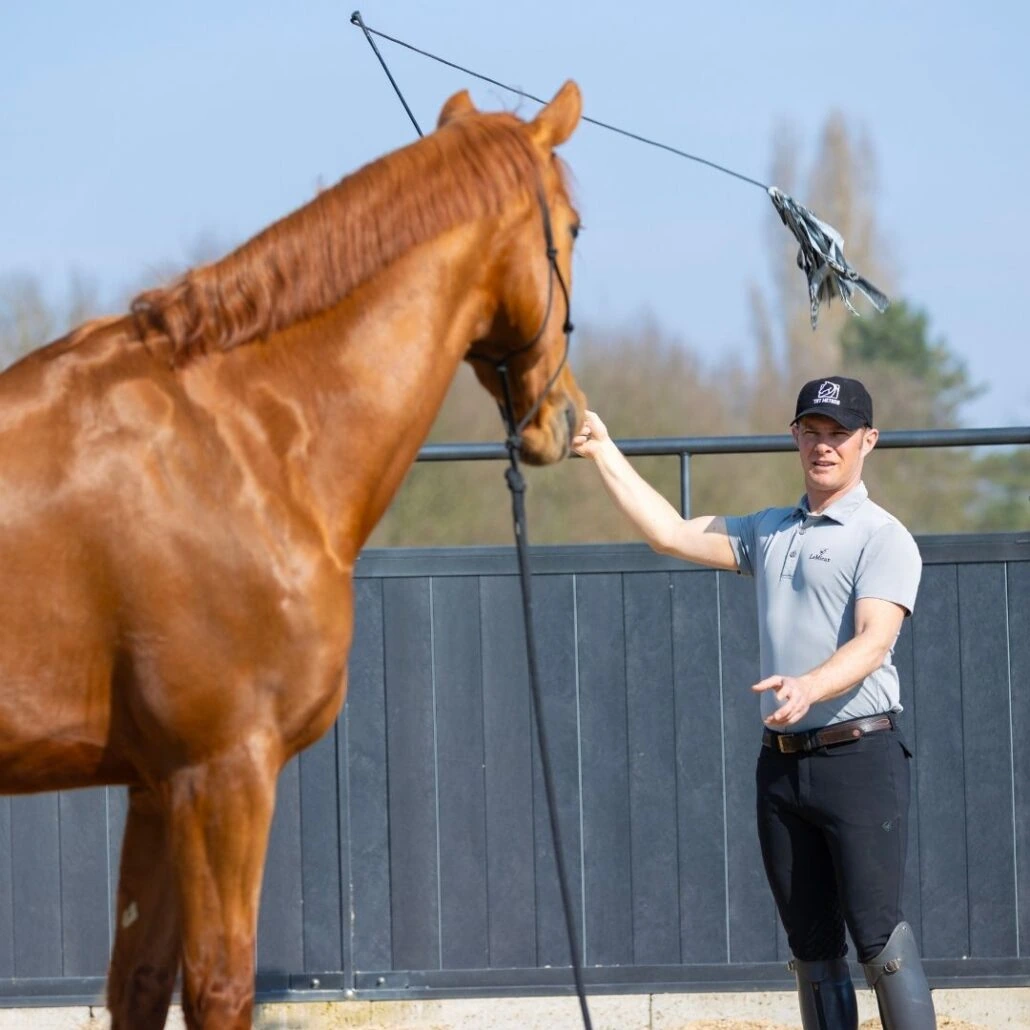
Everything starts on the ground. To break the cycle of tension, you will teach your horse specific physical cues, like lowering the head and relaxing the jaw. Teaching the horse to adopt a relaxed posture physically will directly trigger a parasympathetic response, calming their mind psychologically.

Regulate Tension

Self-Management

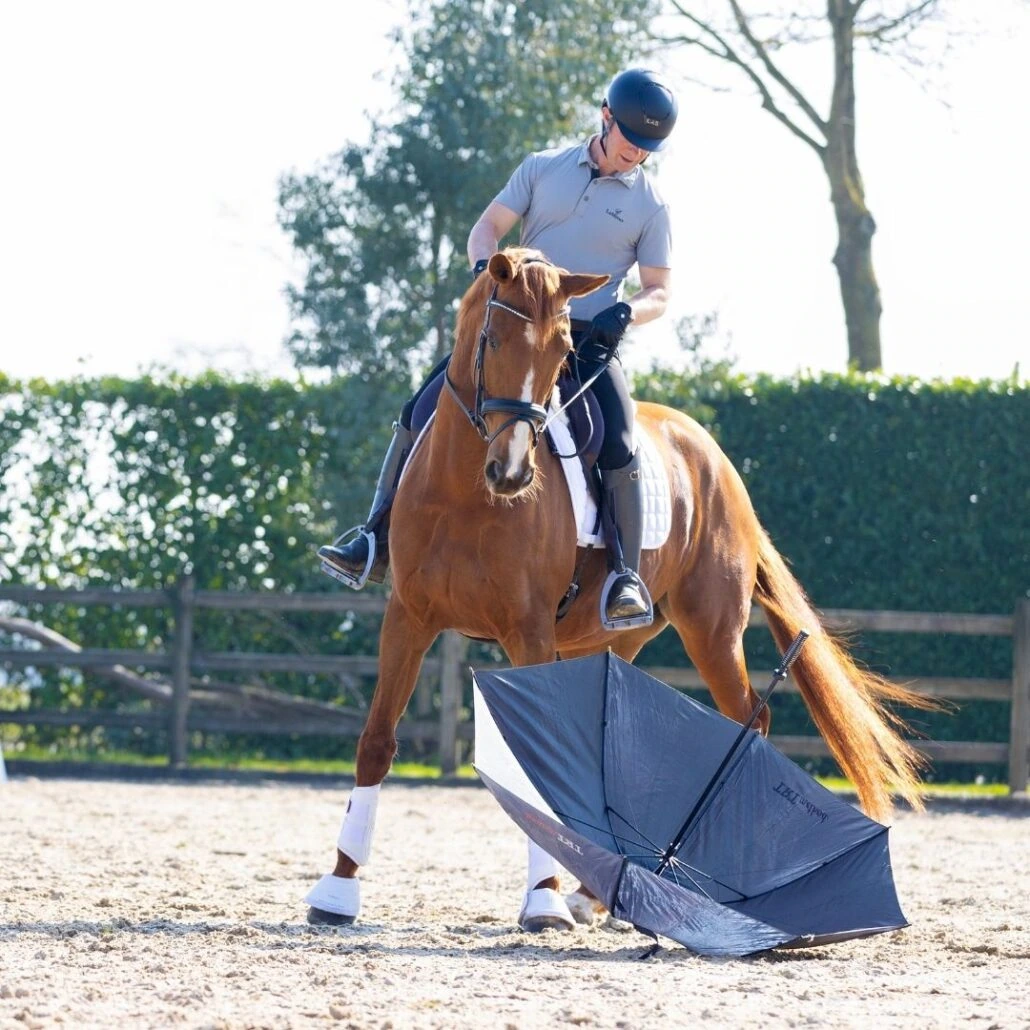
Once your horse knows how to relax, we slowly introduce movement, sound, and touch, in amounts he can handle. When his tension rises, you guide him back to the relaxation exercises, so he practises finding calm while something is actually going on. He learns: “When I get scared in this human world, I know exactly what to do with my body to feel confident again.”

Real Life Applications

Handling, Riding, Trails & Competition

Now we translate everything to the real world. Because you established this language on the ground, your horse will understand the exact same signals in any situation, whether you are loading into a trailer, hacking in the woods, or entering an Olympic stadium.

The Standard

What every TRT course has in common.

TRT started as one method, taught by one man, and that has not changed. But riders kept asking us questions that sat just outside what Tristan teaches. How do I ride without a bridle? How do I get my own nerves under control before I even get on? Could there be something wrong with my horse's mouth?

We could answer those halfway, or we could go and find the people who have spent their entire careers on exactly those questions. We chose the second.

Every trainer who publishes under the TRT name has to meet the same standard:

Standard 01

Relaxation comes before performance.

Not as a warm-up, as the foundation. If a horse can't be calm, nothing built on top of it will hold.

Standard 02

The horse gets a say.

No shutting down, no pushing through, no waiting for a horse to give up.

Standard 03

It has to work at home.

Taught for real riders with real horses and normal facilities, not only for professionals with a full-time team.

The Trainers

Who teaches at TRT.

Each course comes from a different specialist. They share one foundation: a calm, confidence-first approach to horse training.

Tristan Tucker

Founder, The TRT Method

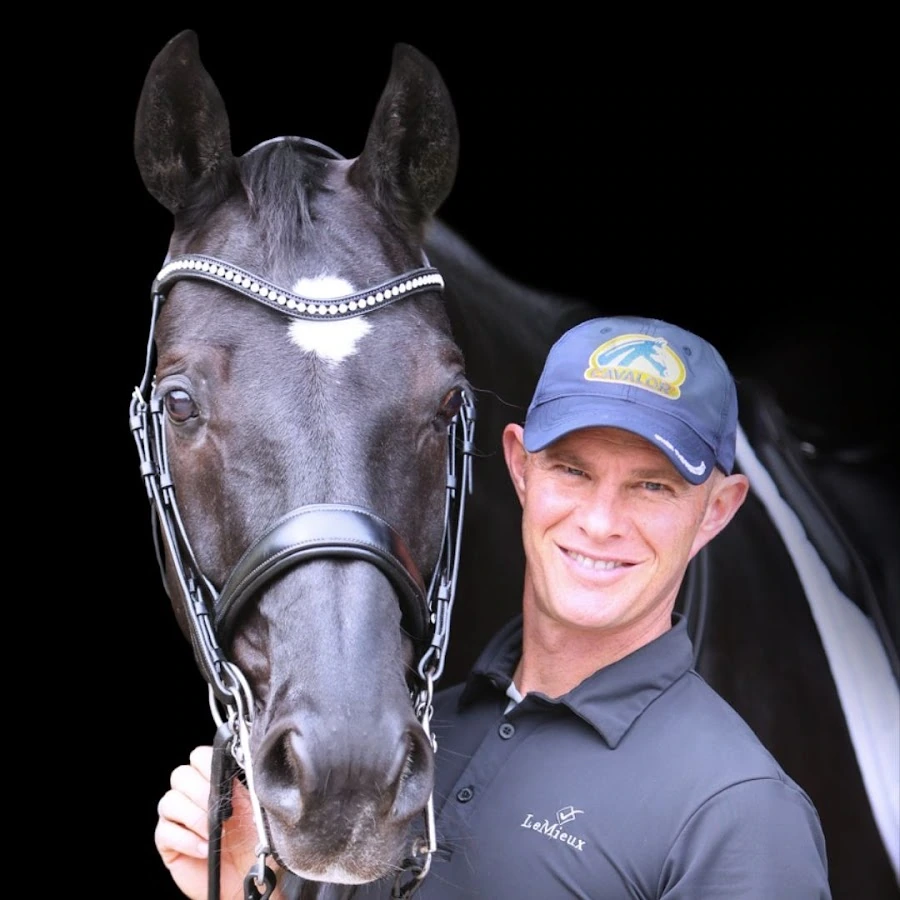
Tristan Tucker

Founder of the TRT Method, Tristan has spent decades helping riders understand tension before it becomes fear or resistance. A Grand Prix dressage rider himself, he has helped riders all over the world build calmer, more confident horses and now works primarily with Olympic riders and other top level riders.

His courses teach practical tools that help horses find their way back to calm in everyday situations and under pressure.

Explore Tristan's Collection
Alizée Froment

Liberty & bridleless riding

Alizée Froment

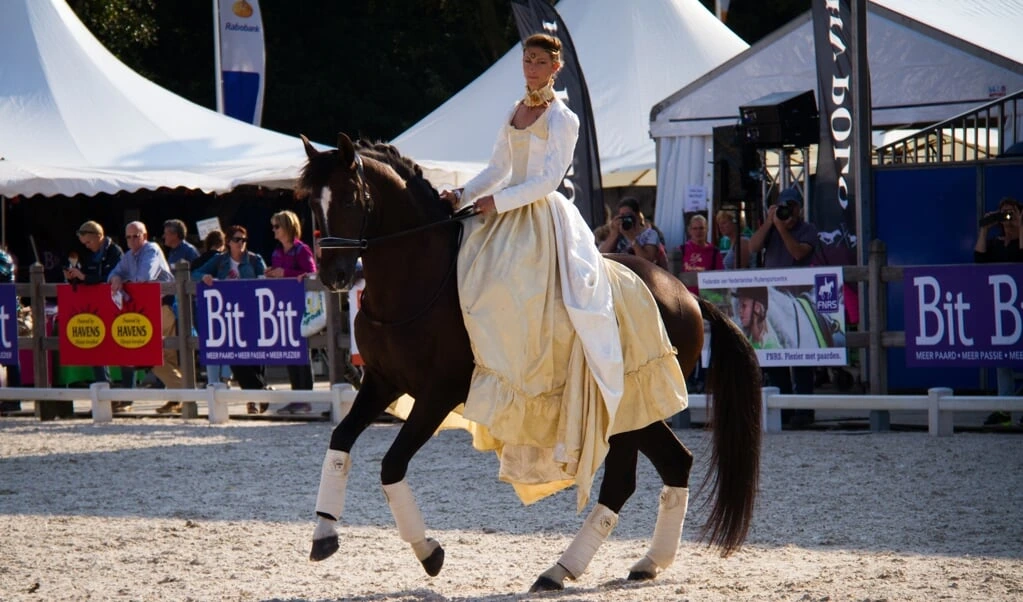
Alizée is celebrated worldwide for her breathtaking liberty performances and for riding Grand Prix dressage completely bitless and bridleless.

But her magic isn't a secret “gift” or a collection of circus tricks. Just like the TRT Method, Alizée's philosophy is deeply rooted in understanding the horse's mind and body. She believes that true performance, whether in the Olympic arena or playing at liberty, can only happen when a horse is mentally relaxed and knows how to self-regulate.

When Tristan Tucker and Alizée met, they realized they spoke the exact same language: building a partnership based on clear communication, boundaries, and a stress-free state of mind, rather than dominance or force.

View Alizée's course
Kristi Seymour

Rider confidence

Kristi Seymour

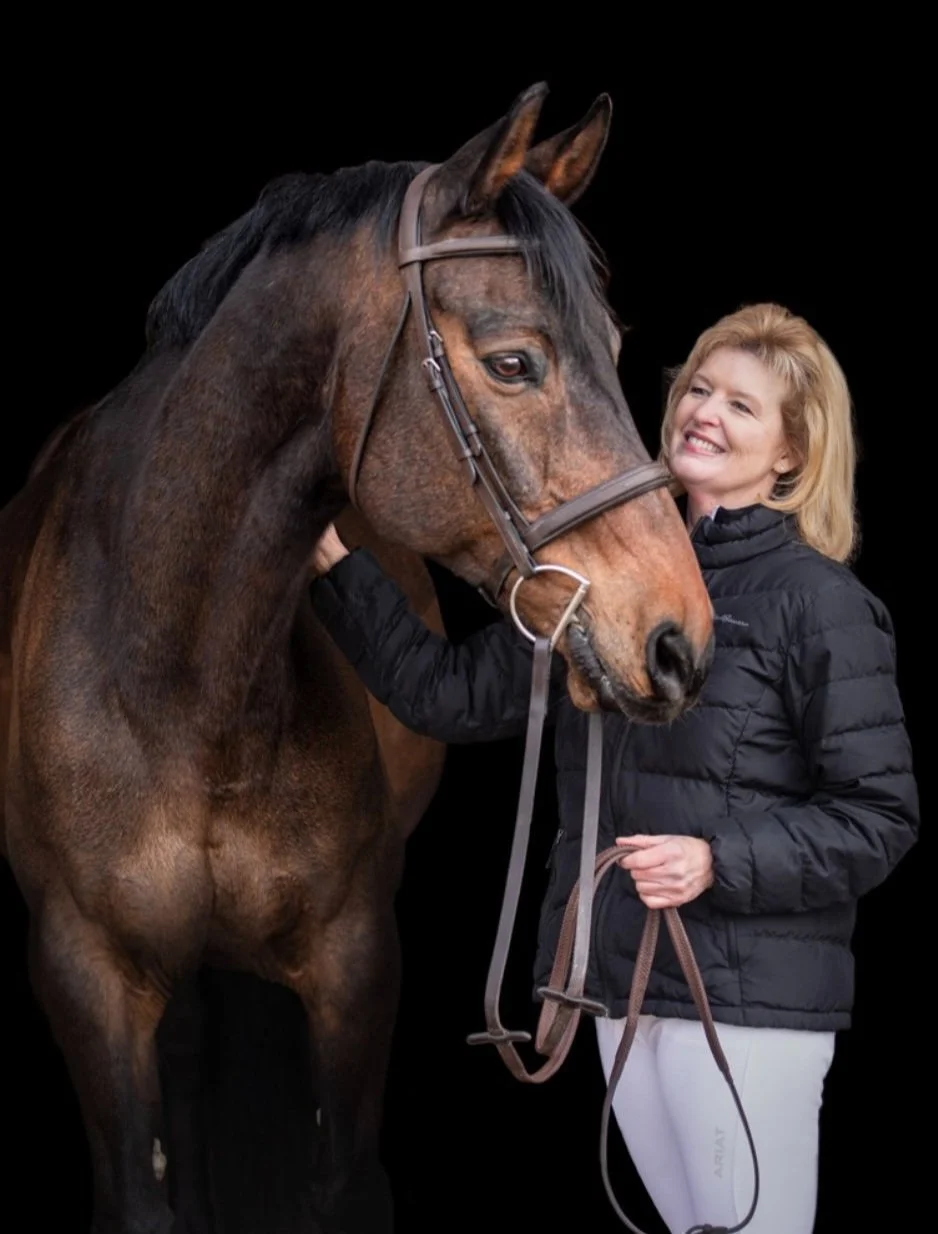
Kristi has worked as a licensed clinical therapist for over 20 years and brings five decades in the saddle to her teaching. She has competed in show jumping up to 1.45m and holds her Bronze Medal in Dressage.

Her work sits where clinical psychology, nervous-system science, and horsemanship meet. She is trained in EMDR, Somatic Experiencing, polyvagal-informed practice, and sports performance psychology, and she uses these tools to help riders rebuild confidence after fear, falls, and burnout.

  • 20+ years as a licensed clinical therapist
  • 50+ years riding, show jumping to 1.45m
  • USDF Bronze Medal in Dressage
  • EMDR and Somatic Experiencing trained
View Kristi's course
Wouter Demey, DVM

Mouth, bit & pain

Wouter Demey, DVM

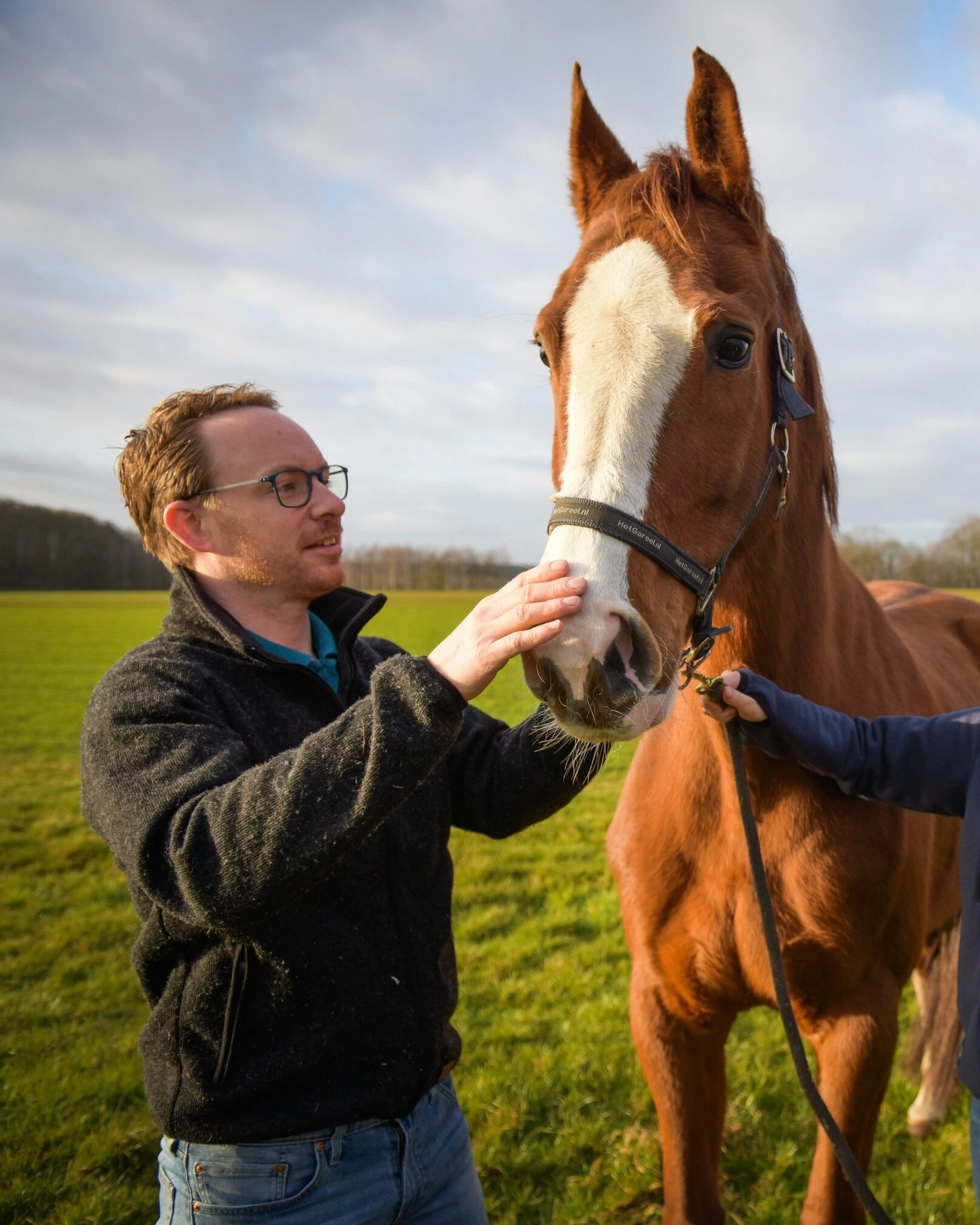
Wouter Demey, DVM, graduated from Ghent University in 2008 and has spent over fifteen years dedicated exclusively to equine dentistry. He is the founder of Equide, one of the first custom-built clinics in Europe focused entirely on dental care for horses.

He is co-founder and chairman of the Nordic College of Equine Dentistry, an international scientific network committed to evidence-based dentistry and equine welfare, and he lectures veterinarians across Europe. His guiding principle is simple: first, do no harm.

His work keeps arriving at the same conclusion the TRT Method was built on: what we see on the outside almost always traces back to something deeper. He works from the mouth outward, the TRT Method works from the mind and body inward, and they meet in the middle. Address the root, not the symptom.
View Wouter's course

Where do you want to start?

The method is one thing. What you do with it depends on your horse and on where the two of you are right now. Have a look at everything we teach, from a single mini-course to a full collection, and pick what fits.

Not ready to choose yet? Start with the free lessons.